IBN / PASSIVE DISPLAY TECHNOLOGY
IBN / Passive Displays
IBN and passive display technologies may support simple, clear and efficient product interfaces where defined icons, status information or lower-complexity display content are required. BOE-VX can help UK and European customers review IBN / passive display options based on interface design, environment, integration and commercial requirements.
.png)
.jpg)
What is IBN and Passive Display Technology?
IBN and passive display technologies are often reviewed for products that need clear, defined information rather than a full graphical display interface. They may be used to show icons, symbols, numbers, status information or fixed interface areas depending on the display design.
These display routes may support simple product interfaces, low-power design goals or cost-sensitive applications. Suitability depends on the required content, viewing conditions, illumination method, operating environment, mechanical design and commercial requirements.
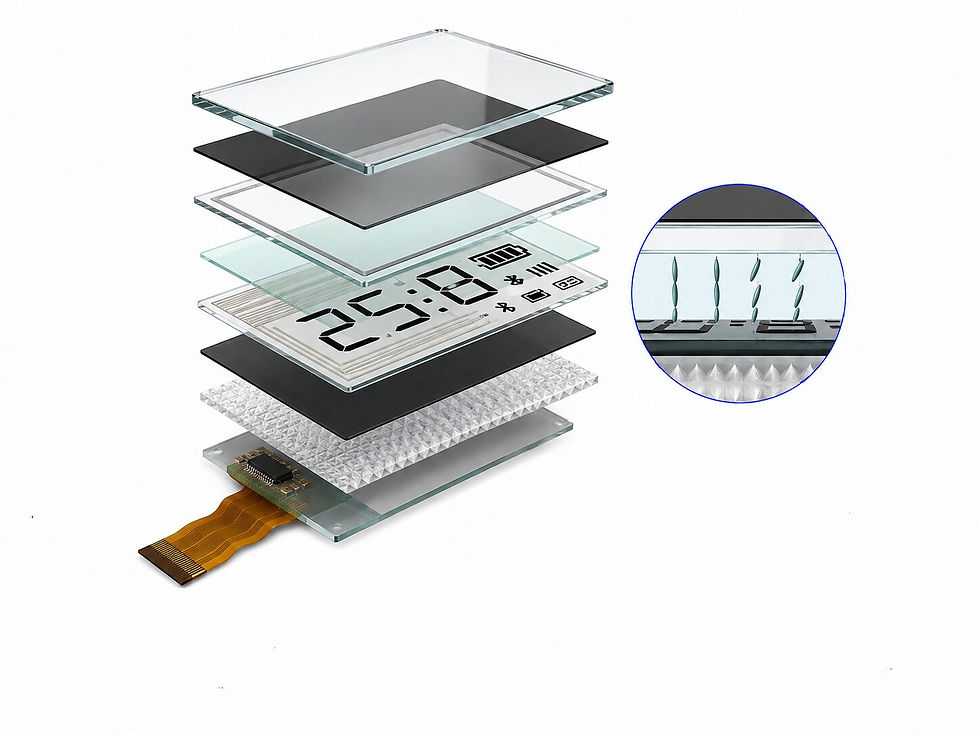
Passive IBN (Icon / Bar / Number) displays use patterned ITO segment electrodes to display numbers, icons and symbols.
Their simple reflective LCD structure delivers ultra-low power consumption, excellent reliability and outstanding readability in ambient light, making them ideal for appliances, industrial equipment, medical devices and battery-powered products.
Passive IBN Display
Where IBN / Passive displays may be used
IBN and passive display technologies may be reviewed for applications where clear status information, defined icons or lower-complexity display content are required.
.png)
Appliance Interfaces
Display options for white goods, kitchen appliances and connected products using defined icons or status areas.
.png)
Industrial Status Displays
Simple information displays for equipment status, alerts, modes or operational feedback.
.png)
Control Panels
Display support for button-based interfaces, dials, switch panels and product control areas.
.png)
Automotive Secondary Displays
Selected vehicle interface areas where defined symbols, indicators or simple status information may be required.
.png)
Portable and Battery-Powered Products
Display options for products where lower-complexity content and power profile need to be reviewed.
.png)
Specialist Embedded Devices
Application-specific products requiring simple display integration, mechanical review and commercial discussion.

Key Benefits of IBN / Passive Display Technology
IBN and passive display technologies can support simple, robust interfaces where defined icons, symbols or segments are required, and where low power, clarity and cost are important.
_edited.jpg)
Simple, Defined Information Display
Low Power Consumption
Robust, Long-Life Operation
Cost-Effective Interface Option
Flexible Icon & Segment Design
Supports Backlighting & Illumination
IBN/Passive Project Requirements to Review
.png)
Display Content and Icon Layout
The required icons, symbols, numbers and information areas should be reviewed against the final product interface.
.png)
Power Consumption Profile
Power requirements should be reviewed against display content, illumination, update behaviour and system design.
.png)
Visual Appearance and Contrast
Display appearance, contrast and readability should be reviewed against the product design and use environment.
.png)
Mechanical and Front Panel Integration
Display size, cover lens, enclosure design and front panel layout should be considered early in the project.
.png)
Backlighting and Illumination
Lighting method, viewing conditions and user expectations can influence the display structure and final appearance.
.png)
Lifecycle and Commercial Fit
Production volume, project timing, lifecycle expectations and commercial targets can influence whether IBN/passive is a suitable route.